REVIEW · BEIJING
Private Tour to Lama Temple, Tian’anmen Square and Forbidden City
Book on Viator →Operated by Discover Beijing Tours · Bookable on Viator
Beijing can feel overwhelming. This private tour strings together the big three sights in one smooth circuit, with special access that helps you spend less time in lines and more time looking up. I love how the tour blends spiritual Beijing at Lama Temple with imperial Beijing at the Forbidden City, and I love that you get a real guide who keeps the story straight as you move. One consideration: the stop time is tight, so if you want to linger for long at every palace hall, you may want extra time on your own afterward.
I also like that it’s truly private—just your group—so you can ask questions and adjust pace without feeling like you’re trapped in a shuffle. In my mind, the standout name here is Lucy, whose energy makes the sights feel organized instead of like a checklist. If your group is visiting multiple museums inside the Forbidden City, plan on possible extra ticket costs since not every museum add-on is included.
In This Review
- Key things to know before you go
- Why this Beijing highlight run works in 4–5 hours
- Lama Temple (Yonghegong): more than a stop, it’s a mindset shift
- Tiananmen Square with fast entry: what to look for in 30 minutes
- Forbidden City: the main axis highlights you don’t want to miss
- Palace of Heavenly Purity and the emperor’s living quarters
- Imperial Garden finish at the North Gate: plan your next step
- Should you book this private tour?
- FAQ
- Is this tour private?
- How long does the tour take?
- What is included in the price?
- Are there extra fees once you’re inside the Forbidden City?
- Does Tiananmen Square include any kind of fast access?
- Do I need a passport for this tour?
- Is pickup available from my hotel?
- What if the weather is bad?
Key things to know before you go
- Skip-the-line style access helps you reach the Forbidden City faster than going solo
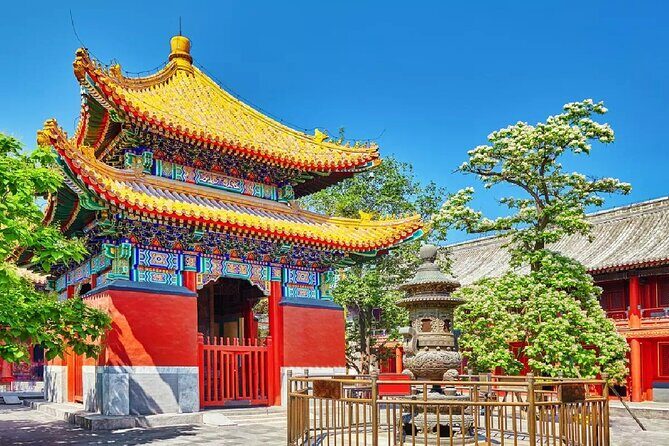
- Lama Temple’s three treasures include the world’s largest sandalwood Buddha and the 500-Arhat Hill
- Tiananmen Square fast entry means you can actually see the key landmarks without losing the whole window
- Middle-axis palace highlights focus on the big ceremonial halls instead of random corners
- Private guide timing keeps you moving but not rushing
Why this Beijing highlight run works in 4–5 hours
This is a compact, high-impact tour for people who want the classic Beijing sweep without spending your whole day stuck on transportation and ticket lines. You’re looking at roughly 4 to 5 hours total, and the timing is built around the most important spaces: Lama Temple, Tiananmen Square, and the Forbidden City’s main ceremonial spine.
The value comes from combining three things at once: a professional guide, entrance fees for the included sights, and a private format. At $108 per person, you’re not just paying for sightseeing—you’re paying for less confusion. With Beijing, the difference between a smooth visit and a frustrating one is often simple stuff: knowing where to enter, what to look for, and how long you’ll realistically have before the route changes.
One practical note: this tour is typically booked about 54 days in advance. If your trip dates are fixed, it’s smart to lock it in early so you’re not bargaining with your schedule later.
If you opt for the private transfer, you’ll also cut down on how much time you spend figuring out taxis across the city. If you don’t, you’ll need to cover transportation yourself, so this works best when you’re comfortable getting around.
Other Forbidden City tours we've reviewed in Beijing
Lama Temple (Yonghegong): more than a stop, it’s a mindset shift
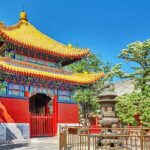
Lama Temple, or Yonghegong, feels like a change of pace from the political monuments of central Beijing. You’ll head straight there from your hotel, and the visit is designed to feel guided, not just observational.
This place carries an unusual backstory. It started as the residence of Count Yin Zhen, who later became Emperor Yongzheng in 1723. After Yongzheng died in 1735, the buildings shifted roles. By 1744, it was turned into a lamasery, staffed by monks from Tibet and Mongolia. That timeline matters because it explains why the temple doesn’t feel purely devotional—it also carries the structure and presence of government and power.
Here’s what you should expect to see, and why it’s worth your time:
- The largest sandalwood Buddha in the world is one of the headline moments. Even if you’re not a Buddha-statue person, the scale is the point.
- The tour also points you toward the bronze Buddhas of past, present, and future. It’s not just viewing; it’s learning how the symbolism hangs together.
- You’ll hear about the yellow sect of Tibetan Buddhism, which is described as becoming the most popular branch within China. The guide’s explanations help this feel understandable instead of abstract.
- The 500-Arhat-Hill adds another layer—more figures, more stories, more detail to absorb than you’d expect in a one-hour stop.
One drawback to consider: you only have about an hour. That’s perfect for getting oriented and seeing the big set pieces, but it’s not enough if you want to study every hall like a graduate student.
Tiananmen Square with fast entry: what to look for in 30 minutes
Tiananmen Square is one of those places where your brain needs context to make sense of it fast. On this tour, you use a travel agency fast pass to enter the square, so you’re not losing your limited time to queueing.
The square is described as the biggest city center square in the world, and your guide uses that scale to help you locate the key landmarks. In 30 minutes, your best strategy is not to try to see everything. Instead, focus on the buildings and monuments that anchor the square’s meaning.
You’ll get a guided look at:
- The Great Hall of the People
- The National Museum
- Chairman Mao’s Mausoleum
- The Monument of the People’s Hero
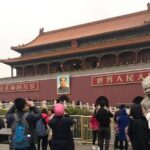
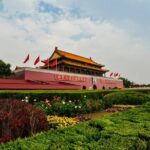
- Tiananmen Gate
The tour doesn’t just point—your guide explains what you’re looking at and why it matters. This matters because if you arrive cold, the square can feel like a huge open space with famous structures you’ve only seen from photos.
Also, since this is in all weather conditions, dress like you mean it. Beijing can swing from cold to windy to damp, and you’ll be outside in the open.
Forbidden City: the main axis highlights you don’t want to miss
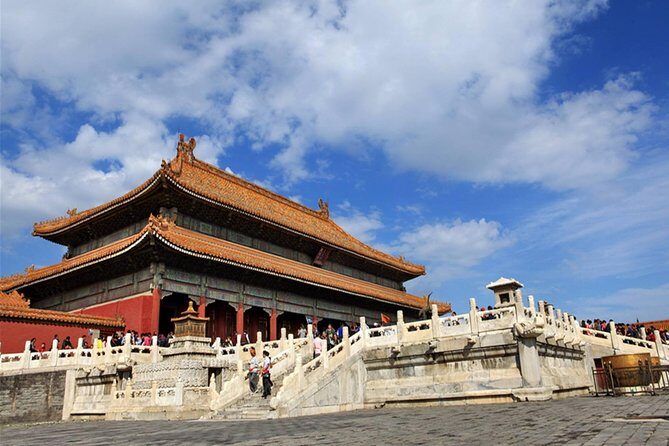
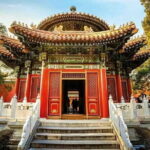
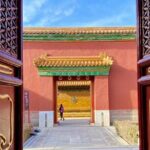
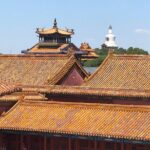
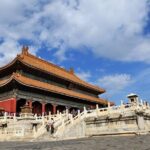
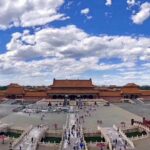
This is where the tour earns its reputation for value. The route is built around the Forbidden City’s “middle axis,” so you hit the ceremonial centers that define the place. You’ll pass through the south gate and enter a vast 250-acre complex that served as the imperial palace for emperors and households for more than 500 years, spanning the Ming and Qing dynasties.
The tour includes skip-the-line access to help you spend your energy inside, not waiting at the entrance.
Instead of wandering, you focus on the big signature halls:
- Hall of Great Harmony
- Hall of Central Harmony
- Hall of Complete Harmony
These halls are the heart of the palace’s ceremonial life. With a guide explaining what each hall represented and how the complex was organized, you start to see the logic of the layout. Without that, it’s easy to admire architecture while missing the reasons behind the order.
A practical consideration: the tour is about highlights, not an entire museum marathon. You’ll cover the major areas tied to the main axis, but it doesn’t promise you unlimited time in every building.
Also watch the fine print on costs. Admission fees are included, but additional entrance fees to the museums inside the Forbidden City are not included. If your group wants museum exhibits beyond the main palace viewing, you may need extra tickets.
Palace of Heavenly Purity and the emperor’s living quarters
After the ceremonial side, the tour shifts to a more human, family-and-residence feeling of the imperial complex. You’ll move to the living quarters portion, visiting the Hall of Heavenly Purity, plus the Hall of Union and the Hall of Earthly Tranquility.
These spaces are a key contrast with the grand audience halls. Instead of public ceremony, they’re about rule, residence, and the daily presence of the imperial household. Your guide shares stories about the emperor and family who lived inside these walls, which helps you connect the physical rooms to actual lives—at least the lives as the court understood them.
Time is still limited (about 30 minutes here), but this section works well because it gives you a second angle on the Forbidden City. You leave with more than photos of impressive doors—you understand how the complex functioned.
If you like architecture but also like explanation, this is a good balance. If you hate being moved along, you’ll want to save extra exploring for after the tour ends.
Other Tiananmen Square + Forbidden City combos in Beijing

Imperial Garden finish at the North Gate: plan your next step
The final stop is the Imperial Garden of the Palace Museum. This is an excellent way to close the circuit because gardens slow you down. It gives your eyes a break after palace interiors and lets you appreciate the layout beyond strict symmetry.
The tour finishes at the North Gate of the Forbidden City. From here, you have options:
- Explore more on your own, or
- Get help from your guide to call or arrange a taxi to your next destination (at your own cost), or
- Choose the private transfer option so you return to your downtown hotel.
I like the flexibility. The North Gate finish is useful because it gives you a decision point. If you’re museum’d out, you can head back. If you want more, you have a natural exit ramp to keep exploring.
Should you book this private tour?
You should book if you want the classic Beijing highlights packed into a short window, with private guide attention and access that saves time. This tour is especially smart for first-time visitors or anyone who only has half a day and doesn’t want to gamble on navigation.
It’s also a strong fit if you like stories tied to what you see. The guide-led pace turns big sites into something you can actually remember: Lama Temple’s transformation from a residence to a lamasery, Tiananmen’s main landmarks, and the Forbidden City’s middle-axis key halls.
Skip this style only if your main goal is slow, deep, everything-included palace wandering. With the timed stops, you’ll be hitting major highlights, not spending hours in every corner.
If you do book, focus your energy the moment you arrive. Use your guide to point you at what matters, and don’t treat it like a race through famous names. You’ll get a lot more out of it.
FAQ
Is this tour private?
Yes. It’s a private tour/activity, meaning only your group participates.
How long does the tour take?
It runs about 4 to 5 hours.
What is included in the price?
The price includes a professional guide, entrance fees for the included sights, and private transfer if you choose that option.
Are there extra fees once you’re inside the Forbidden City?
Admission fees are included for the tour, but additional entrance fees to the museums inside the Forbidden City are not included.
Does Tiananmen Square include any kind of fast access?
Yes. The tour uses a fast pass enter access to enter Tiananmen Square.
Do I need a passport for this tour?
Yes. Passport name, number, expiry, and country are required at booking for all participants, and a current valid passport is needed on the day of travel.
Is pickup available from my hotel?
Pickup is offered. Your guide will meet you in your hotel lobby at your preferred pickup time when booking.
What if the weather is bad?
The tour operates in all weather conditions, so dress appropriately for the conditions.
If you tell me your travel dates and whether you’re staying near central Beijing, I can help you decide whether the private transfer option is worth it for your exact route.