REVIEW · BEIJING
Beijing Wangfujing Calligraphy Class by Forbidden City
Book on Viator →Operated by Hutong Calligraphy Class · Bookable on Viator
A brush, a character, and suddenly you get it. This Beijing calligraphy class in the Wangfujing area turns a cultural topic into a hands-on session with tools in your hands. I like that you work with the basics—ink strokes, brushes, rice paper, and inkstones—instead of watching from the sidelines. I also like the teaching style, especially with the English instructor Richard guiding you step-by-step and even mentioning Mandarin practice. One thing to consider: the session is time-boxed (you can pick different lengths), so if you’re hoping for deep, multi-character calligraphy mastery, you may want a longer option.
You’ll meet at Hilton Beijing Wangfujing and head to the Hutong calligraphy spot. The vibe is practical and relaxed, with an activity that works for both adults and kids, and it’s capped at 15 people so you’re not lost in a crowd. The class also includes a cultural walkthrough, so the strokes have meaning, not just decoration.
In This Review
- Key highlights at a glance
- A Calligraphy Class You Can Fit Near Wangfujing
- Hutong Calligraphy: What You Actually Learn in the 1-Hour Session
- Tools, Tea, and Step-by-Step Guidance (The Part That Makes It Click)
- Making Calligraphy Part of Chinese Culture, Not Just a Skill
- Price and Value: Why $20 Is Competitive for Hands-On Instruction
- Location and Timing: Meeting at Hilton Beijing Wangfujing
- Who Should Book This Calligraphy Class (and Who Might Skip It)
- Practical Tips Before You Go
- Should You Book This Beijing Calligraphy Class?
- FAQ
- How long is the calligraphy class?
- Where is the meeting point?
- How much does it cost?
- What is included in the class?
- Do I need to bring my own calligraphy tools?
- Is there an option for English instruction?
- How many people are in the group?
- Is a mobile ticket used?
- What about questions during the class?
- What is the cancellation policy?
Key highlights at a glance
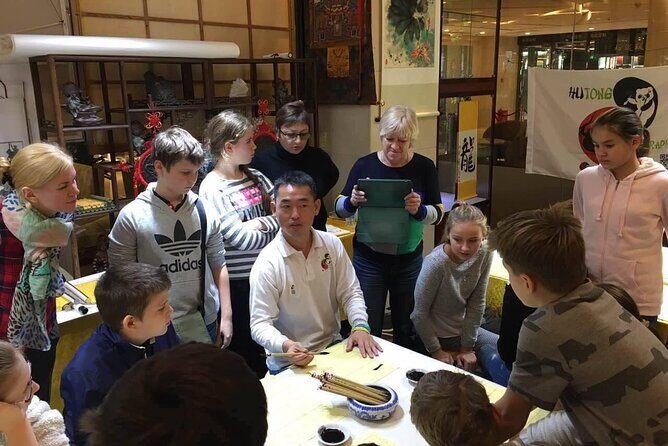
- Small group size (max 15) helps you actually get feedback while you practice
- English teaching with Richard makes the instructions easy to follow
- Hands-on tools like brushes, ink, rice paper, and inkstones are part of the class
- You learn more than writing—seals and the purpose of strokes in Chinese culture get explained
- Family-friendly and cool indoors, with tea mentioned as part of the experience
A Calligraphy Class You Can Fit Near Wangfujing
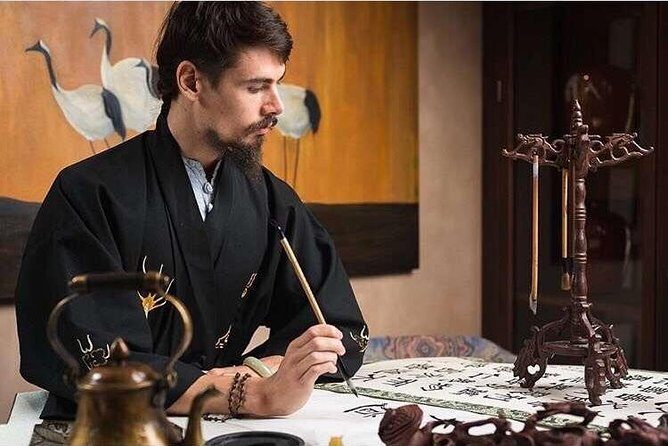
Beijing can be intense: big sights, lots of walking, and constant decision-making. This class is a different kind of Beijing day. It’s culture you do with your body—hand movement, breath, pace—rather than culture you only look at. The location also helps. You’re starting from Hilton Beijing Wangfujing, right by the Wangfujing area, so you can pair this with shopping and sightseeing nearby without burning your whole afternoon.
What I like most is that the class doesn’t feel like a souvenir workshop. It’s framed as learning an ancient practice: how calligraphy works as an artistic expression of language in a tangible form. That matters, because once you understand the “why,” the strokes stop feeling random and start feeling intentional.
And since it’s a Hutong calligraphy setting in the downtown area, you get a cultural activity that feels tied to real Beijing rhythm, not just a stand-up stage show.
Other Forbidden City tours we've reviewed in Beijing

Hutong Calligraphy: What You Actually Learn in the 1-Hour Session
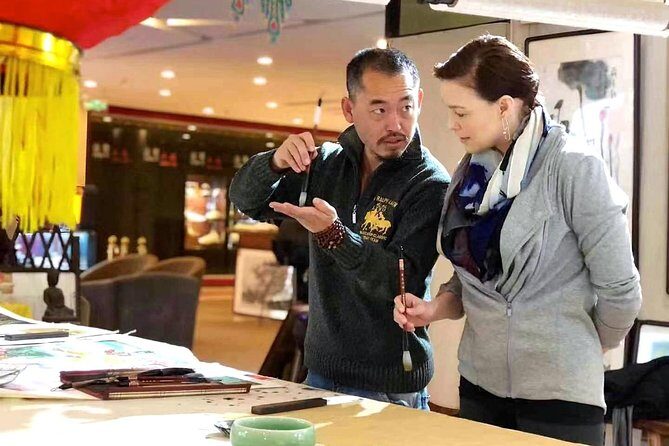
The itinerary is straightforward: one main stop for the Hutong calligraphy class. Depending on what you book, your session could be shorter or longer, but the core flow stays the same: learn the tools, learn the strokes, then practice until you can copy what your teacher shows.
Here’s what the class is designed to cover:
- how to hold and use a brush
- how ink behaves and how strokes change when you adjust pressure and speed
- how rice paper and inks work together
- why calligraphy is more than letters—it’s a record of energy in motion, shown through time and rhythm
You’ll also learn practical elements that beginner classes often skip. Seal carving is part of the curriculum, and the session includes mentions of seal carvings, brush technique, rice paper, and inkstones (the stone you work with to prepare or manage ink). Even if you only get a taste, you’ll leave knowing what these things are for.
One clear win from the experience: people don’t just go home with a single stroke practice page. In the longer or more complete format, you may make something decorative—like a character or a board—after you get better during the class. That gives you a satisfying finish, not just a brief demo.
Tools, Tea, and Step-by-Step Guidance (The Part That Makes It Click)
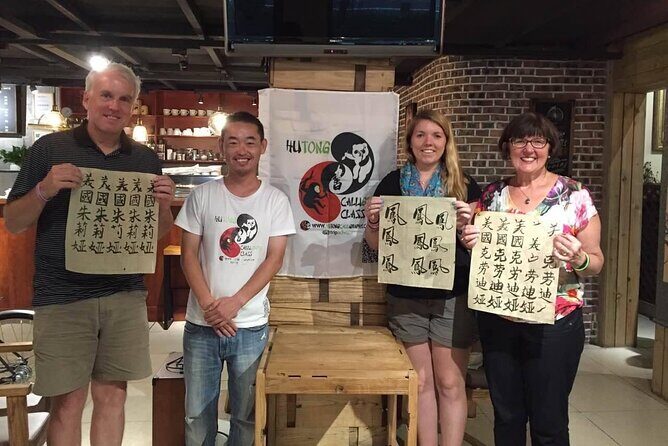
Calligraphy sounds intimidating until someone breaks it down. In this class, the goal is that you understand each step, not that you instantly produce perfect Chinese characters.
The instruction is taught in English, and the teacher Richard is specifically mentioned in feedback. That’s a big deal for most visitors, because calligraphy terms and stroke rules can get lost in translation. With an English teacher, you’re more likely to follow the logic behind the lines: where you start, how you move, and how you finish.
The classroom setup also makes it easier to focus. One reason this class gets such strong ratings is that it’s described as an indoor setting (even air-conditioned), which helps if Beijing weather is hot, windy, or just plain tiring. Tea is included in the experience details you’ll likely appreciate once you’re seated with your supplies.
So what do you do, minute to minute?
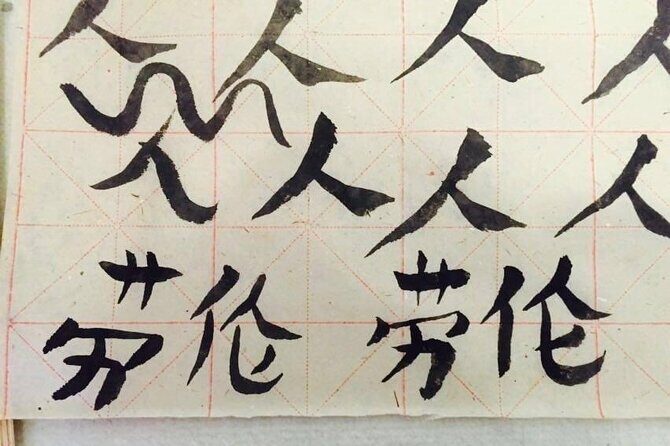
You start with the fundamentals: tools and basic stroke behavior. Then you copy. Then you adjust. The teacher keeps you on track so your strokes get cleaner, not just different. Over time, your hand learns what your eyes are seeing.
And if you’re doing this with kids, this format is ideal. A short, structured session gives them something tangible to do, and the cultural explanation keeps it from turning into just crafts time.
Making Calligraphy Part of Chinese Culture, Not Just a Skill
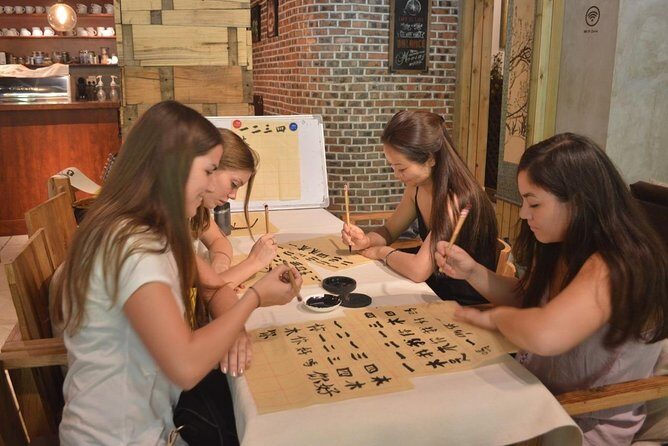
This is where the “value” lives. The class frames calligraphy as part of Chinese culture in a way you can use immediately. You’re not only learning how to write a character—you’re learning why it’s respected.
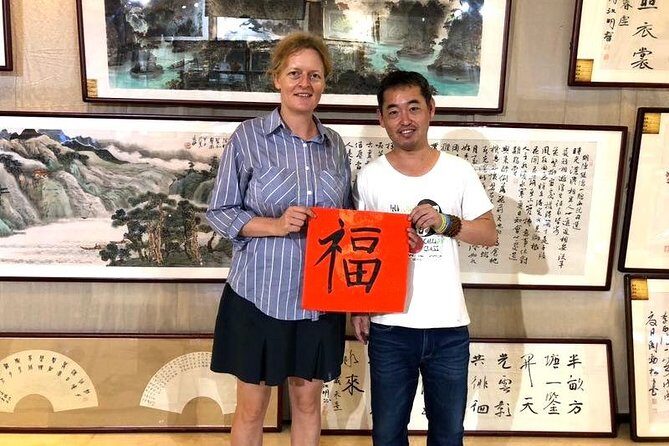
Calligraphy matters in Chinese life because it treats writing as art, and art as discipline. It also works as a kind of mental practice. The rhythm of strokes—slow enough to control, quick enough to keep energy—teaches you about patience and attention. In feedback, the experience is often described as fun and meaningful, especially when participants learn to write a lucky or positive character.
Even the smaller details connect to the bigger picture. You’re taught about ink and paper interaction, so you realize the tools are not just props. Rice paper changes how ink spreads and dries, and the inkstone teaches how ink is handled. Those facts turn the activity from a magic trick into a craft with real rules.
Price and Value: Why $20 Is Competitive for Hands-On Instruction
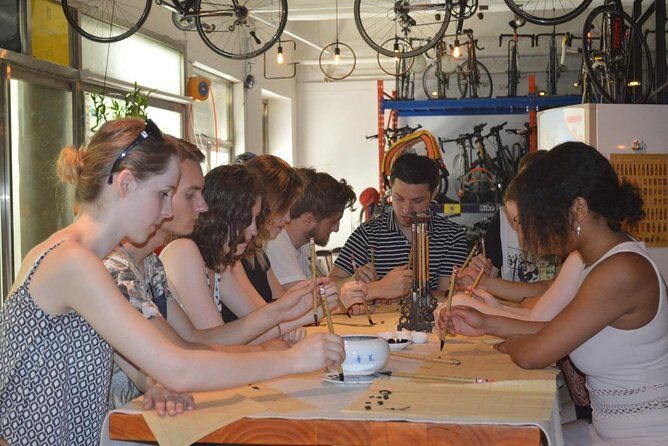
At $20 per person, this class is priced like an easy add-on, not a premium museum workshop. For what you get—an English-speaking teacher, calligraphy supplies used during the class, and a session focused on personal practice—that’s solid value.
You’re also not stuck paying for a full-day tour. You can pick among multiple time options (30 minutes, 90 minutes, 1 hour, 2 hours listed on the booking options). That flexibility helps you match your energy level and attention span.
A quick way to judge value for this specific activity: compare the cost to how much skill time you receive with a real instructor. This class is small-group and practice-heavy, so the $20 isn’t just covering entry. It’s paying for coaching while you learn the strokes and tools.
The only extra cost you might reasonably plan for is tipping. Gratuities are recommended but not included. That’s typical for many cultural classes, and it’s worth budgeting a small amount if you feel the teacher guided you well.



Location and Timing: Meeting at Hilton Beijing Wangfujing
The logistics are simple. You start at Hilton Beijing Wangfujing (Wangfujing area). The class itself is described as in the downtown Beijing Hutong area, and it’s listed at No. 8 Wangfujing Dongjie. After the session, it ends back at the meeting point.
This matters because it keeps the activity low-stress. You’re not trying to coordinate rides or navigate a distant venue after already spending time in the city. Instead, it slots neatly into a day you might otherwise spend around Wangfujing and nearby sights.
Timing-wise, the class is approximately 1 hour (with other duration choices available depending on what you book). That makes it easy to avoid decision fatigue. If you’re planning a first trip and want one meaningful cultural activity that doesn’t swallow your whole afternoon, this fits.
Who Should Book This Calligraphy Class (and Who Might Skip It)
This works best if you:
- want a hands-on cultural activity with real instruction
- are traveling with kids or want an activity that doesn’t require high fitness
- like the idea of learning tools and basic technique, not just taking photos
- want a small-group setting where you can ask questions
It can be a good match even if you’re a total beginner. The class is built around teaching the basics of strokes and the purpose of calligraphy in Chinese culture, so you’re not expected to already know the script.
You might want to consider a different activity or a longer calligraphy option if you:
- want to produce several finished pieces in one sitting
- are hoping for a deep dive into advanced composition and long-form brush technique
- dislike seated, focused workshops (even though it’s short, it’s still practice-based)
Practical Tips Before You Go
A few practical ideas will help you get more out of the class.
Ask about the strokes you’re doing, not just the character. Calligraphy is more about how you draw the line than which symbol you pick. When you understand pressure, speed, and start/finish points, your results improve fast.
Pick the time length that matches your goal. If you only want a taste, a shorter option can be perfect. If you want to finish something more decorative or feel more confident before you stop, choose a longer session.
Bring patience, not perfectionism. The real point is learning control and rhythm. Your first attempts won’t look like a printed masterpiece, and that’s okay. With practice and a good teacher, they get better during the class.
Plan for a small indoor break in your day. It’s mentioned as an indoor setting with tea, which is great when you need a pause from Beijing heat and crowds.
Should You Book This Beijing Calligraphy Class?
I’d book it if you want an authentic-feeling cultural experience with a practical payoff: you learn how to write with brush and ink, and you leave with a sense of what calligraphy means in Chinese culture. The small group size (up to 15), the English instruction, and the hands-on tools make the class feel worth the time.
If you’re the type who likes “one skill, one lesson, one outcome,” this is a strong pick. It’s also a nice break from heavy sightseeing days, and it’s family-friendly without being dumbed down.
If you tell me your travel dates and whether you’re choosing 30 minutes, 1 hour, or 2 hours, I can help you decide which option best fits your schedule and goals.
FAQ
How long is the calligraphy class?
The class duration is listed as approximately 1 hour. Other duration choices (30-minutes, 90-minutes, 2-hour) are available when booking.
Where is the meeting point?
You meet at Hilton Beijing Wangfujing, located in the Wangfujing area (王府井东街8号), and the activity ends back at the same meeting point.
How much does it cost?
The price is listed as $20.00 per person.
What is included in the class?
The class includes a calligraphy session based on the option you choose, an excellent English calligraphy teacher, and the calligraphy supplies used during the class.
Do I need to bring my own calligraphy tools?
No. The calligraphy suppliers to use during the class are included.
Is there an option for English instruction?
Yes. The class includes an excellent English calligraphy teacher.
How many people are in the group?
The experience has a maximum of 15 travelers.
Is a mobile ticket used?
Yes, the experience features a mobile ticket.
What about questions during the class?
You’re encouraged to ask questions you may have during the session.
What is the cancellation policy?
You can cancel for a full refund if you cancel up to 24 hours in advance of the experience start time. Free cancellation is available under that window.